
A Prayer For Friday

§ “There are always people willing to commit unspeakable human atrocity in exchange for a little power and privilege.”
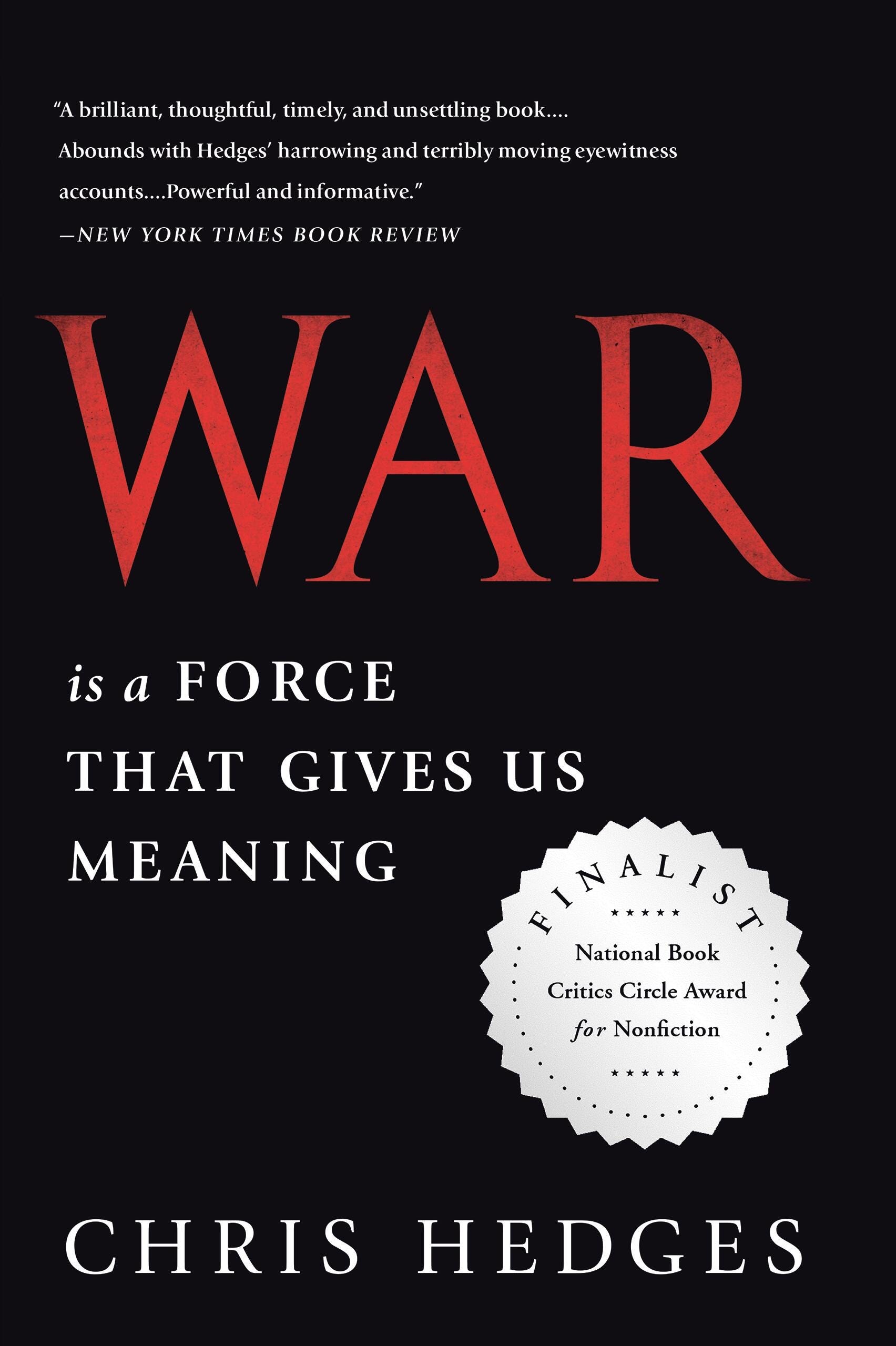
§ “I learned early on that war forms its own culture. The rush of battle is a potent and often lethal addiction, for war is a drug, one I ingested for many years. It is peddled by mythmakers- historians, war correspondents, filmmakers, novelists, and the state- all of whom endow it with qualities it often does possess: excitement, exoticism, power, chances to rise above our small stations in life, and a bizarre and fantastic universe that has a grotesque and dark beauty.”
§ “The historian Will Durant calculated that there have only been twenty-nine years in all of human history during which a war was not underway somewhere.”
§ “The enduring attraction of war is this: Even with its destruction and carnage it can give us what we long for in life. It can give us purpose, meaning, a reason for living. Only when we are in the midst of conflict does the shallowness and vapidness of much of our lives become apparent. Trivia dominates our conversations and increasingly our airwaves. And war is an enticing elixir. It gives us resolve, a cause. It allows us to be noble. And those who have the least meaning in their lives, the impoverished refugees in Gaza, the disenfranchised North African immigrants in France, even the legions of young who live in the splendid indolence and safety of the industrialized world, are all susceptible to war’s appeal.”
§ “Many of us, restless and unfulfilled, see no supreme worth in our lives. We want more out of life. And war, at least, gives a sense that we can rise above our smallness and divisiveness.”
§ “The moral certitude of the state in wartime is a kind of fundamentalism. And this dangerous messianic brand of religion, one where self-doubt is minimal, has come increasingly to color the modern world of Christianity, Judaism, and Islam.”
§ “In the beginning war looks and feels like love. But unlike love it gives nothing in return but an ever-deepening dependence, like all narcotics, on the road to self-destruction. It does not affirm but places upon us greater and greater demands. It destroys the outside world until it is hard to live outside war’s grip. It takes a higher and higher dose to achieve any thrill. Finally, one ingests war only to remain numb.”
§ “As long as we find in patriotism and the exuberance of war our fulfillment, we will never understand those who do battle against us, or how we are perceived by them, or finally those who do battle for us and how we should respond to it all. We will never discover who we are. We will fail to confront the capacity we all have for violence.”
§ “Where else, but from the industrialized world, did the suicide hijackers learn that the huge explosions and death above a city skyline are a peculiar and effective form of communication? They have mastered the language.”
§ “The potency of myth is that it allows us to make sense of mayhem and violent death. It gives a justification to what is often nothing more than gross human cruelty and stupidity. It allows us to believe we have achieved our place in human society because of a long chain of heroic endeavors, rather than accept the sad reality that we stumble along a dimly lit corridor of disasters. It disguises our powerlessness.”
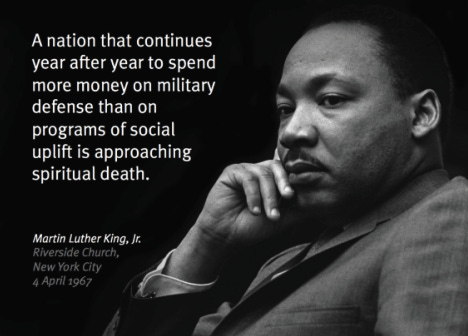
§ “War is necrophilia. And this necrophilia is central to soldiering, just as it is central to the makeup of suicide bombers and terrorists. The necrophilia is hidden under platitudes about duty or comradeship. It awaits, especially in moments when we seem to have little to live for and no hope, or in moments when the intoxication of war is at its pitch, to be unleashed. When we spend long enough in war it comes to us as a kind of release, a fatal and seductive embrace that can consummate the long flirtation in war with our own destruction. The ancient Greeks had a word for such a drive. They called it ekpyrosis - to be consumed by a ball of fire.”
§ “Lurking beneath the surface of every society, including ours, is the passionate yearning for a nationalist cause that exalts us, the kind that war alone is able to deliver. It reduces and at times erases the anxiety of individual consciousness. We abandon individual responsibility for a shared, unquestioned communal enterprise, however morally dubious.”

§ “Five months after Zoran’s disappearance, his wife gave birth to a girl. The mother was unable to nurse the child. The city was being shelled continuously. There were severe food shortages. Infants, like the infirm and the elderly, were dying in droves. The family gave the baby tea for five days, but she began to fade.
“She was dying,” Rosa Sorak said. “It was breaking our hearts.”
Fejzić, meanwhile, was keeping his cow in a field on the eastern edge of Goražde, milking it at night to avoid being hit by Serbian snipers.
“On the fifth day, just before dawn, we heard someone at the door,” said Rosa Sorak. “It was Fadil Fejzić in his black rubber boots. He handed up half a liter of milk he came the next morning, and the morning after that, and after that. Other families on the street began to insult him. They told him to give his milk to Muslims, to let the Chetnik children die. He never said a word. He refused our money. He came 442 days, until my daughter-in-law and granddaughter left Goražde for Serbia.”
The Soraks eventually left and took over a house that once belonged to a Muslim family in the Serbian-held town of Kopaci. Two miles to the east. They could no longer communicate with Fejzić.
The couple said they grieved daily for their sons. They missed their home. They said they could never forgive those who took Zoran from them. But they also said that despite their anger and loss, they could not listen to other Serbs talking about Muslims, or even recite their own sufferings, without telling of Fejzić and his cow. Here was the power of love. What this illiterate farmer did would color the life of another human being, who might never meet him, long after he was gone, in his act lay an ocean of hope.”
§ “There are few individual relationships—the only possible way to form friendships—in war. There are not the demands on us that there are in friendships. Veterans try to regain such feelings, but they fall short. Gray wrote that the “essential difference between comradeship and friendship consists, it seems to me, in a heightened awareness of the self in friendship and in the suppression of self-awareness in comradeship.”
§ “The poison that is war does not free us from the ethics of responsibility. There are times when we must take this poison - just as a person with cancer accepts chemotherapy to live. We can not succumb to despair. Force is and I suspect always will be part of the human condition. There are times when the force wielded by one immoral faction must be countered by a faction that, while never moral, is perhaps less immoral.”
§ “But reconciliation, self-awareness, and finally the humility that makes peace possible come only when culture no longer serves a cause or a myth but the most precious and elusive of all human narratives—truth.”
§ “To survive as a human being is possible only through love. And, when Thanatos is ascendant, the instinct must be to reach out to those we love, to see in them all the divinity, pity, and pathos of the human. And to recognize love in the lives of others - even those with whom we are in conflict - love that is like our own. It does not mean we will avoid war or death. It does not mean that we as distinct individuals will survive. But love, in its mystery, has its own power. It alone gives us meaning that endures. It alone allows us to embrace and cherish life. Love as power both to resist in our nature what we know we we must resist, and to affirm what we know we must affirm. And love, as the poets remind us, is eternal.”

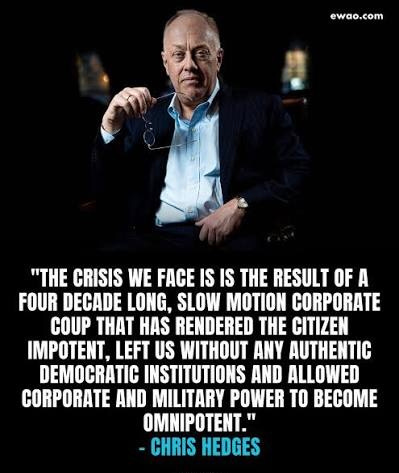
Thanks for this superb collection of quotations.
Very powerful and sobering. I can see Coleman swinging his arm between audacity and humility as I read it. Chris’ quote: “But love, in its mystery, has its own power. It alone gives us meaning that endures. It alone allows us to embrace and cherish life” brought tears to my eyes. Heaven help us all.