
Georgia on My Mind
Fourth of July, 2026

I was born in Ft. Benning, Georgia, in April 1958, in the red soil of the Jim Crow South. My parents were from Brooklyn and the Bronx. My father, Roderick, was the first one in his family to go to college, Fordham University and then Georgetown Medical School. He was training as a young resident at Ft. Benning. My mother, Doris, who never graduated from a four-year college, remembers counting the cockroaches crawling on the wall as she waited for the army doctor to induce labor because he was hungry and it was getting late for dinner. She had coins thrown in her face shortly after by an angry white woman when Doris, a Northerner, spoke up for her friend, who happened to be Black, for the money that was owed her for cleaning the woman’s house. My mother and her friend bent down and picked up the crumpled bills and coins scattered across the front steps as the woman cursed and slammed the door shut. My father was getting his hair cut in a local barbershop nearby and overheard men talking in low voices about bombing a synagogue in Atlanta. It was the summer of 1958. I asked my father what he said. He told me the barber had a razor to his throat.

Four months later, Roderick and Doris drove north, with their new country beagle, Charlie Brown, and three-month-old child, Michael, through the Shenandoah mountains to Mt. Vernon, New York. One note concerning the journey north: during the first hot August morning, the beagle was pacing and slathering drool from the back seat upon said mother and child. Dr. Roderick pulled the car over to the side of the road. He took out his shiny black doctor’s bag and injected the dog with a shot of tranquilizer. Charlie Brown slept the whole rest of the way north to the George Washington Bridge in New Jersey.

I learned later that Ft. Benning was named after a Confederate general. I had known it was the base for the School of Americas, when I drove back—the only time—with my friend Dave Johnson from Harvard Divinity School forty years ago in the summer of 1986 after I was ordained in South Boston. We drove down in my shiny new Toyota with green and white Massachusetts license plates. On the way, we saw a sign for white-water rafting and pulled down a dirt road to ask the price of going on the Chattahoochee River near where the movie Deliverance was filmed. We could barely understand the thick Georgia accents of the three white men who looked over slowly at our car. “Well,” one man finally said, “we’re all booked up for today. But you all come back now. And next time, you bring Ted Kennedy. He knows about water.”

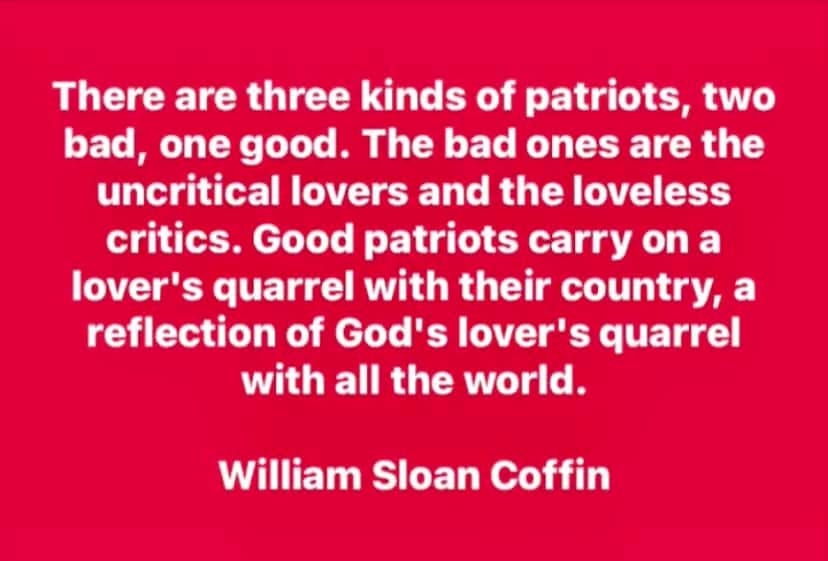
The words my father overheard in the Georgia barbershop in the summer of 1958 were prophetic. The Hebrew Congregation Temple, Atlanta’s oldest synagogue and an active partner for civil rights, was bombed a few months later by white supremacists in October 1958. The building was severely damaged by the dynamite fueled explosion. Five suspects were arrested after the bombing; none were ever convicted. Yet hatred does not have the last word. When Jon Ossoff was sworn in as Georgia’s first Jewish senator in January 2021, he held the Hebrew Bible that belonged to Rabbi Jacob Rothschild, the leader of that synagogue and a friend of Martin Luther King Jr. When Raphael Warnock was sworn in two weeks later as the first Black senator from Georgia, he was the first Black democrat elected to a Senate seat by a former state of the Confederacy. Jon Ossoff is now running for re-election and Raphael Warnock is standing up and speaking out across the nation with his new book, The Crooked Places Made Straight.
II. Amidst the two hundred and fiftieth anniversary of the nation’s founding, the narrative daydreams of MAGA whiteness, militarism, misogyny, corruption, and violence are being disrupted in elections, organizing, and resistance on the streets of this nation. There are tragically many more children of God across the world who are now dying under this corrupt regime—through lack of medical care, poverty, and violence—than in multiple decades. Yet no lie can live forever. A new generation of leadership is rising. When I go to events and rallies in Trenton and New York there are not only dozens of retired Quakers and Presbyterians in sandals— as in years past—but thousands of young persons and leaders rising.
America is presently engaged in an existential battle for its soul, a kind of second Civil War. Voting rights in many red states are being eviscerated. In some public school districts, laws were passed forbidding the study of our racial history and its bitter legacy. The Supreme Court and Congress are horrifically enabling MAGA. Arrayed against the movement for truth and compassion in America is a toxic mix of Trump world cowardice and nihilism, white supremacy, predatory capitalism, Christian nationalism, and the propaganda of right-wing media. As the demographics of the nation are changing, many whites and rich plutocrats are afraid of losing dominance and beneath that, of nothingness.

If the forces of hatred and oligarchy cannot effectively cling to power through “legally” suppressing the vote, then authoritarian rule is their only option. This is a genuine either/or moment in American history. Cognitive dissonance will either lead by grace and walking prayer toward breaking into a more just and merciful multi-racial democracy— or double-downing on tyranny and a demonic police state.

Given the empirical reality of sin, people of faith and radical love should not be afraid of facing the brokenness of our racial and plutocratic history, it should be a call for honest reflection, confession, life-giving community, and redemptive action. Healing the existential wound in America will not mean the damage never existed. It will mean the damage no longer has to dominate our lives and life together. Some of the hope is eschatological.
A friend of Thomas Merton, Jim Forest, once wrote, “What we see and what we fail to see defines who we are and how we live our lives. Our constant challenge is to be aware of the divine presence—and at the same time be alert to the demonic, to be able to tell the difference between that which safeguards life and that which destroys.”
(Jim Forest, Lord That I Might See)

I learned in my life that we can run, but cannot hide from the severe Mercy. This is true in different ways for self, community, and nation. God’s grace is unrelenting. The unmasking and naming is part of the new life breaking in. Here in the trembling truth of self and other, wild grace is hidden, at work. Here is discovery of new possibilities. Thus, the way opens, by little  and by little. And leads to finding one’s true voice, and more courageous if humble walking with the community of many colors and nations.
III. How shall we join our voices in walking prayer in this time of reckoning?
When Cornel West gave his charge to Chris Hedges in Elizabeth he charged us all. He charged us to radically love our neighbor by centering the experience of African-American people, “… who’ve been terrorized and traumatized and stigmatized for four hundred years in a land that likes to trivialize their suffering and overlook their humanity. It’s a beautiful thing when you think of the Miles Hortons . . . the Anne Bradys . . . Abraham Joshua Heschel, and the Erik Foners in scholarship that put at the center of the modern experience the vicious legacy of white supremacy. You don’t remain stuck there, but once you go through that lens you’re gonna be able to more readily understand the suffering of others.

Why? Because the degree to which Black people have been so hated and despised. We have no monopoly on that, not at all. But if you come in that way, you’re going to understand working people a little bit better . . . poor people all around the world a little bit better . . . patriarchy and the sisters a little bit better . . . our gay brothers and lesbian sisters a little bit better, you’re going to understand empire . . . and the wretched of the earth a little bit better . . .

The great Reinhold Niebuhr used to say that any justice that’s only justice soon degenerates into something less that justice. Justice must be rescued by something deeper than justice. And the only thing deeper than justice is love. And for a Christian like me, old school Christian, the only thing that keeps me going, is the blood at the cross, or I would snap, I’d go crazy, and I might do it anyway. I was a gangster before I met Jesus. And now I’m a redeemed sinner with gangster proclivities. The only thing keeping me is that love . . .

So the kingdom of God, that we have the audacity to still align ourselves with, if that kingdom of God is within you, then everywhere you go, you ought to leave a little heaven behind. That’s the charge: how much heaven are you going to leave behind in your short move from your mama’s womb to tomb . . . How much heaven will all of us leave behind? More to come.

But in the end Samuel Beckett is right, ‘Try, fail. Try again, fail again, fail better.’ That when they put us in the grave, even following the charge, we’re still a relative failure because we fell on our faces; but most importantly we bounce back, because we wanted to be part of that love train, that quest for the kingdom of God, that humility that our dear brother Professor James Cone was talking about at the center of the gospel which is inseparable from memory and inseparable from tenacity. Charge to each one of us: how do we learn to love our crooked neighbor with our crooked hearts? Grace. Amazing grace. Empowers!”
(Leigha Cohen, video, Cornel West and Chris Hedges”

So be it!
Resonating with the word you’ve shared. “A word fitly spoken is like apples of gold in a setting of silver.” Thank you.
Thanks mucho, Rev. Michael, for your compelling memories of our overland journey to Georgia long ago. Both of my parents were from Columbus GA. Their stories, from the land of cotton, pecans, and peanuts, left lasting impressions. Blessings, Dave J