
The Iona Paradox

“In my deepest wound, I saw Your glory, and it dazzled me.” (Augustine)
“The human is a fragment and a riddle to the self. The more we experience and know that fact, the more we are really human. Fragments remain fragments, even if one attempts to reorganize them. The unity to which they belong lies beyond them; it is grasped through hope. The power of love transforms tragic fragments into symbols of the whole.” (Paul Tillich)
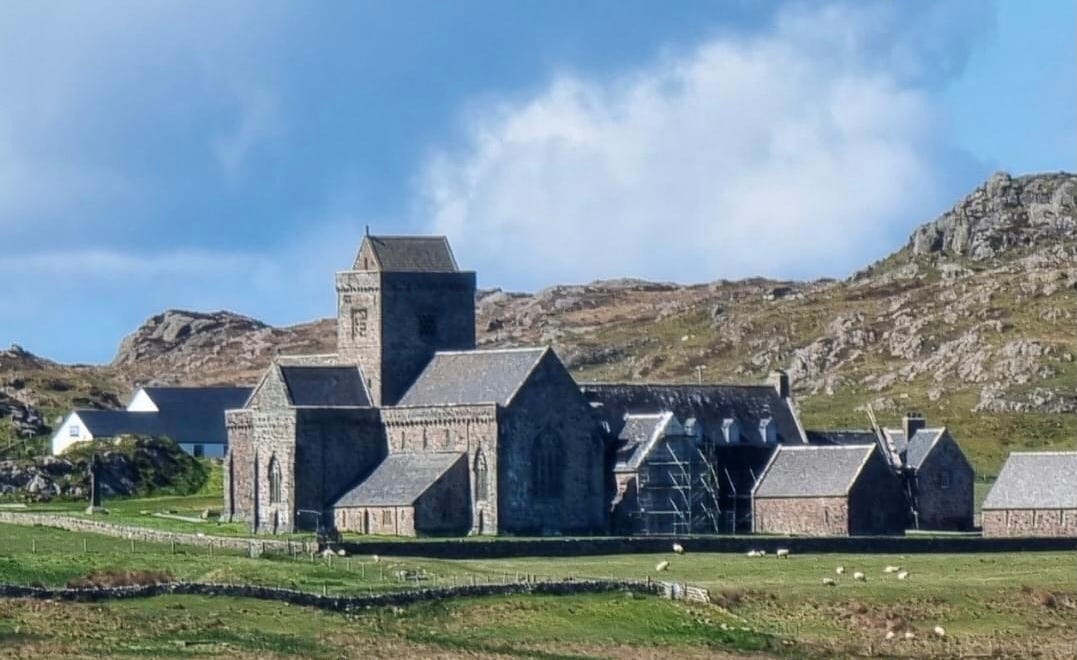
Several years ago I spent the winter and spring on a small (one by three mile) rocky island in the Atlantic Ocean off the coast of Scotland—Iona. St. Columba first brought Christianity from Ireland in the 560s, which he then used as his base to evangelize Scotland and Scandanavia. Since then, various monastic communities, crofters, fisherman, seagulls, and Presbyterians have inhabited this bleak but beautiful isle.
About fifty residents and guests lived, worked, and worshipped at the retreat center when I was there. Iona contains some of the oldest black surface rock on the earth and some of the worst weather. Huge storms with gale force winds would blow in from the north Atlantic and rage for days. I learned to walk bent over to compensate for the fifty-mile-per-hour gusts. Occasionally, the driving sleet, snow, and rain would stop and there would be a brief period of calm and “brightness.” We’d run outside to savor the weak horizontal light. Sometimes amidst our “sun dance” there were even wee glimpses of rainbow. But mostly it was absolutely the worst weather I have ever seen.
During one five-day storm, the ferry from the island of Mull was cancelled for the week, and we had to live off food stocks: endless tea, oatmeal (with salt, not sugar), thick stale bread and old yellow pudding. When I grew weary of caffeinated tea and asked for the herbal variety, the locals laughed, “The Yank wants Herb tea!” Later in the month when I came down with the inevitable flu and was bedridden, friends somehow found and brought me fresh green salad with a slice of tomato—a miracle!
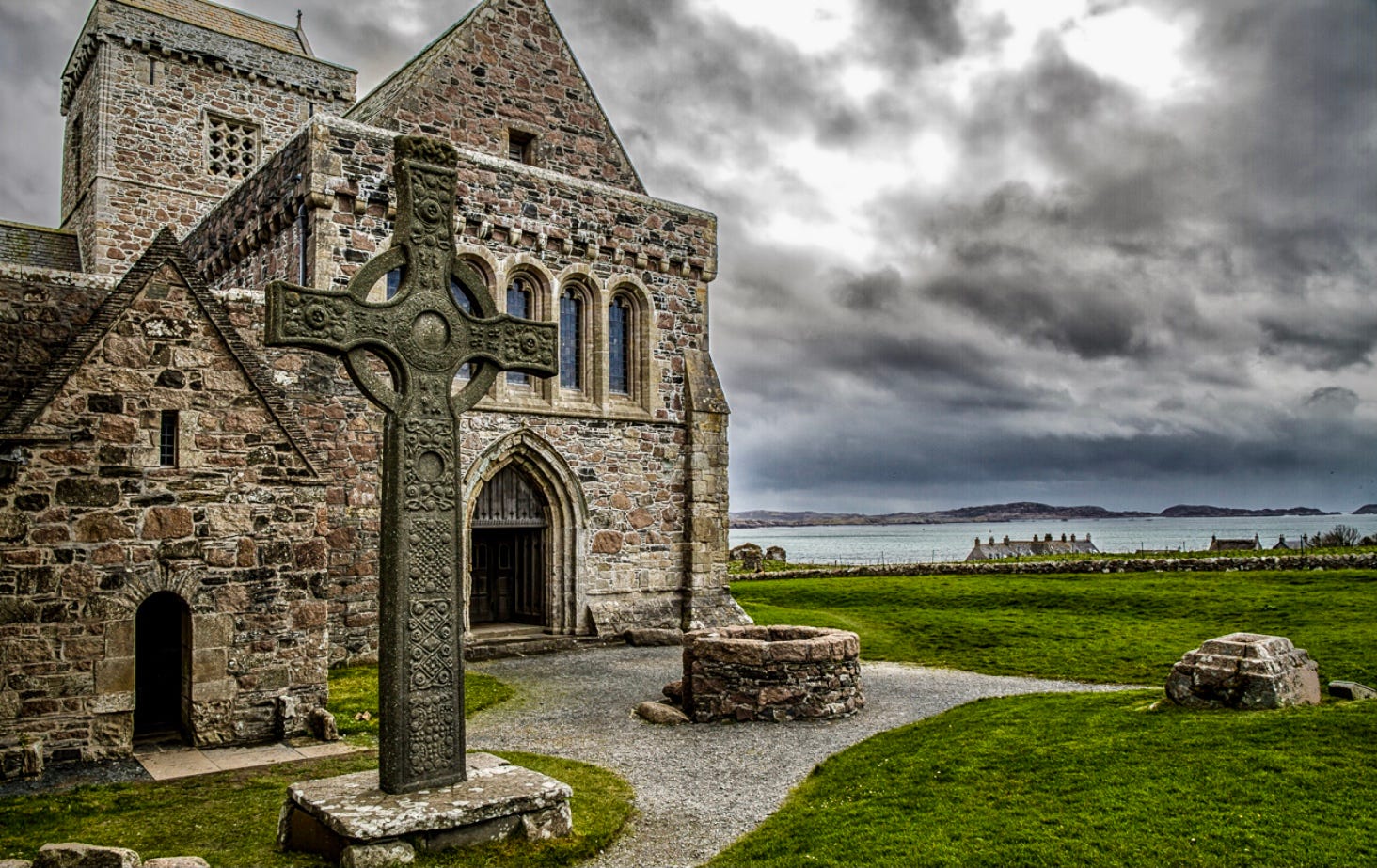
Three times daily we trudged though the darkness and cold and gathered to worship in the abbey. There was no heat and only candlelight (my job was to light the candles, so I better not be late). There was no organ, just the sound of the wind howling outside. I remember singing with that small company, “O Come, O Come Emmanuel, to ransom captive Israel, who mourns in lonely exile here . . . Rejoice, Rejoice, Emmanuel shall come to thee O Israel.”
Strangely, the severity of weather and life seemed to contribute to the warmth of the Spirit and community. Acknowledging the existential darkness allowed the light to truly shine. Why is that?
I believe the Iona Paradox can be stated as follows: the more we acknowledge our hurt and brokenness, the more we are open to the divine-human light. And the inverse is equally true: the less we acknowledge our hurt, fear, and hostility (and project it onto others), the less we are open to the true light of forgiveness, justice, and joy. In the very things that we ignore, reject, and even despise as dirty and strange, God’s incarnate light and presence is shining deep in the flesh.
In other words, God is in the wound.
The prophet was right, “The people who walked in deep darkness have seen a great light; those who have lived in a land of deep darkness—on them light has shined” (Isaiah 9:2)
Thank you Michael for this Christmas meditation. I especially resonated with "I believe the Iona Paradox can be stated as follows: the more we acknowledge our hurt and brokenness, the more we are open to the divine-human light." The Isaiah quote is awesome this winter solstice.
I’m so envious of your extended time on Iona - even with the 50mph winds. Merry Christmas!